
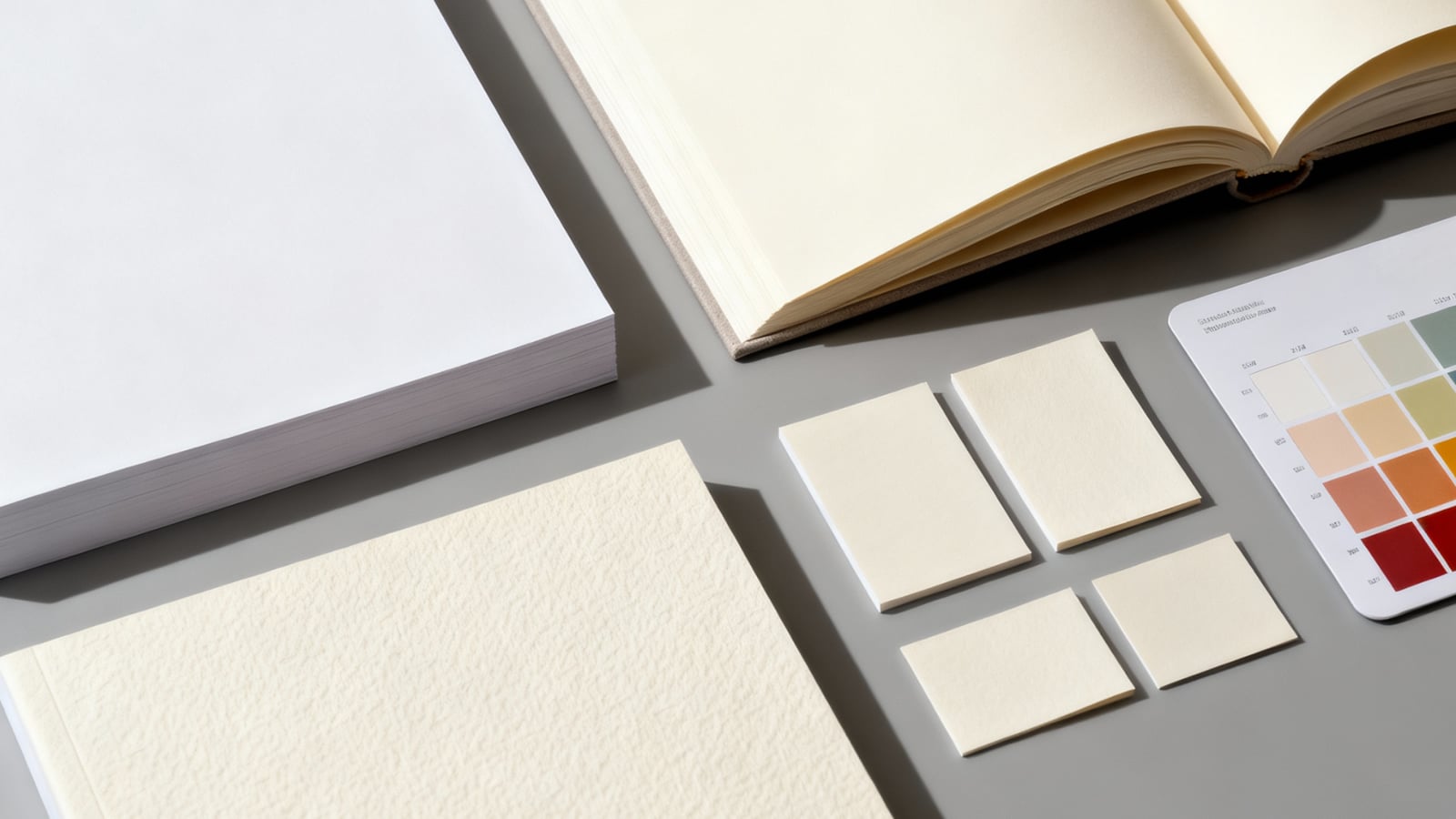





When you plan a new book, most of the attention naturally goes to the manuscript, the cover design, and the marketing plan. But there is one element that every reader touches on every single page: the paper. The paper you choose will change how colors reproduce, how the book feels in the hand, how long it lasts on the shelf, and even how “serious” or “premium” your book appears in the eyes of your readers.
In this guide, our team at ChinaBestPrinting walks you through the major book paper options—from coated vs. uncoated, to GSM, color, opacity, environmental choices, and budget trade-offs—so you can make confident, professional decisions for your next printing project.
- 1. Why the Paper You Choose Really Matters
- 2. Coated vs. Uncoated: The Two Big Families of Book Paper
- 3. Understanding GSM: How Heavy Should Your Paper Be?
- 4. Matching Paper Options to Different Types of Books
- 5. Paper Color, Opacity, and Environmental Considerations
- 6. Balancing Quality and Budget: Smart Paper Decisions
- 7. A Simple Framework for Choosing Your Book Paper
- Need Help Choosing the Perfect Paper for Your Book?
At a glance
For text-heavy novels, cream uncoated paper around 70–90 gsm gives the most comfortable reading experience. For vibrant image-heavy books, such as children’s picture books or coffee table titles, coated papers in the 150–200 gsm range are usually ideal. For workbooks and journals, white uncoated paper around 100–120 gsm balances opacity, writability, and cost.
1. Why the Paper You Choose Really Matters
Readers rarely talk about paper in reviews, but they feel it in every moment of using your book. A cheap, thin sheet that shows heavy show-through can make even the best-written content feel low value. On the other hand, a well-chosen paper stock signals quality before the reader has even started chapter one.
Paper influences several key aspects of your book:
- Visual quality: how crisp text and images appear, how vibrant colors look, and how evenly ink lays on the page.
- Tactile feel: the thickness, stiffness, and surface texture when a reader flips through the pages.
- Reading comfort: glare, brightness, and the warmth of the paper tone all affect eye strain during longer reading sessions.
- Durability & lifespan: thicker, acid-free, and well-specified papers help a book survive years of reading and handling.
- Production & shipping cost: heavier and more exotic papers increase both printing costs and freight charges.
- Perceived brand value: paper choice communicates whether your book is a budget, standard, or premium product.
For these reasons, professional publishers almost never treat paper as an afterthought. Instead, they start with the book’s purpose and target reader, then work backwards to the most suitable paper options. That is exactly the approach we recommend at ChinaBestPrinting.
2. Coated vs. Uncoated: The Two Big Families of Book Paper
Almost all book papers belong to one of two large families: coated and uncoated. Understanding the difference here is the single most important step in making a good paper decision.
2.1 Coated Paper – For Vibrant Images and Smooth Surfaces
Coated paper is made by applying a special mineral coating onto the fiber base. This treatment creates a smoother, less absorbent surface that keeps ink sitting closer to the top of the sheet. The result is sharper detail, cleaner lines, and richer colors—especially in photographs and illustrations.
Coated stocks come in different finishes:
- Gloss: Shiny and highly reflective. Gloss coated paper delivers maximum color saturation and the “punchiest” images. It is common in catalogs, photo books, and some children’s picture books, but the glare can be tiring for text-heavy pages.
- Matte: Smooth but non-reflective. Matte coated paper preserves image quality without strong reflections, making it more comfortable for pages that mix text and images, such as cookbooks, non-fiction titles with charts, and design books.
- Silk / Satin: A middle ground between gloss and matte, with a gentle sheen and a very pleasant “premium magazine” feel. Many high-end coffee table books and upmarket brochures choose silk or satin as a default.
Typical interior weights for coated book papers range from 115–170 gsm, while covers are often printed on 200–300 gsm coated stocks. For oversize art books, heavier options may be used, but that will significantly increase the weight of each copy.
2.2 Uncoated Paper – For Comfortable Reading and Writing
Uncoated paper has no mineral coating. The fibers are more open, so the sheet feels softer, more porous, and closer to what most people think of as traditional “book paper”. The ink penetrates slightly into the fibers, which leads to a more muted look for images, but text becomes very pleasant and easy to read.
This makes uncoated paper ideal for:
- Novels and literary fiction where reading comfort matters more than vivid color.
- Journals, planners, and workbooks where users will highlight, underline, and write notes.
- Educational materials, manuals, and corporate documents that need a more serious tone.
Within the uncoated family, there are also premium sub-types such as volume papers and high-end book stocks, which combine low weight with good opacity and a refined feel.
| Feature | Coated Paper | Uncoated Paper |
|---|---|---|
| Surface | Smooth, sealed, less absorbent | Natural, fibrous, more absorbent |
| Best for | Photos, illustrations, high-impact color | Long-form reading, notes, writing |
| Reading comfort | Excellent for short bursts, can glare in gloss | Excellent for long sessions, low glare |
| Image reproduction | Very sharp, vivid, high detail | Softer, less saturated colors |
| Writing with pen/pencil | Not ideal, ink sits on surface | Ideal, ink and graphite bond well |
3. Understanding GSM: How Heavy Should Your Paper Be?
GSM—grams per square meter—is the simplest way to think about paper weight. The number tells you how much a one-meter-square sheet of the paper weighs. Higher GSM means a heavier, usually thicker, and often more opaque sheet.
In practical book printing, GSM affects:
- Book thickness: Heavier papers create a thicker spine for the same page count.
- Opacity: Higher GSM usually means less show-through from the reverse side.
- Perceived quality: Readers associate heavier papers with higher-quality books.
- Shipping weight: Every extra gram is multiplied by page count and print run size.
| GSM Range | Typical Use in Books | Notes |
|---|---|---|
| 70–80 gsm | Economical novels, long text-only books | Light, flexible, and cost-effective; some show-through may be visible but often acceptable for fiction and non-illustrated content. |
| 90–100 gsm | Standard trade paperbacks, non-fiction, manuals | A balanced choice for better opacity and a slightly more substantial feel without a big jump in cost. |
| 115–135 gsm | Illustrated pages, magazines, higher-end interiors | Often used for books that mix text and images; a good entry point for coated stocks. |
| 150–170 gsm | Premium interiors, cookbooks, photo books | Feels noticeably thicker and more premium; excellent for rich color and double-sided image printing. |
| 200–300 gsm | Softcover covers, insert pages, dividers | Provides stiffness and durability; commonly laminated on covers for extra protection. |
| 350–600 gsm | Board books, packaging-style covers | Extremely rigid; ideal for toddler books and products that demand strong physical presence. |
At ChinaBestPrinting, we usually recommend staying within the 70–120 gsm range for most interior text pages, and 200–300 gsm for covers. For special projects, our team can help you test heavier or lighter options to achieve a particular design or cost target.
4. Matching Paper Options to Different Types of Books
Instead of starting from the paper and working forward, it is more practical to start from your book type and let that guide the paper choice. Below are the combinations we see most often in successful projects.
4.1 Novels and Literary Fiction
For long-form reading, your readers will spend hours with the book, so eye comfort is critical. That is why most trade publishers choose:
- Paper type: Uncoated
- Color: Cream or natural white
- Weight: Around 70–90 gsm, depending on page count
Cream-toned uncoated paper reduces glare and gives a traditional bookstore feel. A 300–400 page novel printed on 70–80 gsm will usually have a comfortable thickness and manageable shipping weight.
4.2 Non-fiction, Business, and Educational Books
Non-fiction and business titles often mix text with tables, charts, diagrams, and sometimes small images. Readers may also highlight or annotate. A typical spec might be:
- Paper type: Uncoated or lightly coated
- Color: White for maximum contrast and clarity
- Weight: 80–100 gsm for good opacity and a solid feel
White paper helps fine lines in charts and diagrams remain clear, and the slightly higher weight compared to novels makes the book feel substantial without being too heavy.
4.3 Children’s Picture Books
Children’s books need bright, durable pages. Kids flip, press, and sometimes mishandle pages, so print durability is as important as color reproduction. For most picture books, we recommend:
- Paper type: Coated (gloss or matte)
- Color: White for vibrant illustrations
- Weight: 150–200 gsm for rigidity and opacity
Gloss coated paper gives highly saturated colors, while matte or silk coated stocks reduce glare and fingerprints. Some publishers even choose thicker board-style papers (350+ gsm) for toddler and early learning titles.
4.4 Cookbooks, Design Books, and Coffee Table Titles
These books are often displayed, gifted, and used as conversation pieces. The paper therefore has to carry both design and brand expectations. Typical specifications include:
- Paper type: Matte or silk coated
- Color: Bright white
- Weight: 150–200 gsm for interiors, 250–300 gsm for covers
A slightly heavier paper stock helps pages lie flatter and gives a luxurious, confident flip. The surface should be smooth enough to render fine details in photographs while avoiding harsh reflections under indoor lighting.
4.5 Workbooks, Planners, and Journals
In workbooks and planners, usability is everything. Readers need to write on the pages with pens, highlighters, and sometimes markers, so the paper must be friendly to writing instruments and resistant to heavy show-through.
- Paper type: Uncoated
- Color: White for clarity, cream for a softer aesthetic
- Weight: 100–120 gsm
This specification allows most pens to write cleanly with minimal bleed-through, while keeping the book’s weight within a practical range for daily carry and use.
4.6 Board Books and Extra-Durable Formats
For very young readers, typical interior papers are not strong enough. Board books and some educational products require rigid, laminated boards in the 350–600 gsm range. These can be printed on coated surfaces and protected further with laminations or special finishes.
5. Paper Color, Opacity, and Environmental Considerations
5.1 White vs. Cream: Tone and Reading Comfort
Paper color may seem like a small detail, but it has a strong psychological and practical impact. White paper looks clean and modern and is excellent for color images, charts, and diagrams. Cream or natural paper feels warmer and more traditional, and is often preferred for long-form reading such as literary fiction and narrative non-fiction. :contentReference[oaicite:5]{index=5}
5.2 Opacity: Managing Show-Through
Opacity describes how much printing from the reverse side of a page is visible from the front. Insufficient opacity leads to ghosted text and images that distract the reader. Increasing GSM, using cream-toned papers, and choosing the right printing coverage all help control this issue.
For typical text-heavy books, interior papers in the 70–90 gsm range usually offer acceptable opacity. For heavily illustrated titles and books with dark, full-bleed images, we strongly recommend higher GSM to reduce show-through and maintain a polished appearance.
5.3 Sustainable and Certified Papers
Many authors and publishers now actively look for environmentally responsible paper options. At ChinaBestPrinting, we can supply papers with recycled content and papers certified by organizations such as FSC, depending on your specification and project requirements.
- Recycled content: Uses post-consumer fibers while maintaining modern print quality.
- FSC certification: Verifies that fiber comes from responsibly managed forests.
- Right-sizing: Choosing suitable GSM and trim sizes to avoid waste and reduce freight impact.
6. Balancing Quality and Budget: Smart Paper Decisions
Paper is one of the biggest line items in a printing budget, so a thoughtful choice can save significant money without compromising quality where it matters most.
A few practical strategies:
- Match paper to reader expectations: Thriller or romance readers may not notice the upgrade from 80 gsm to 100 gsm, but they will notice a great cover design. For gift books, the opposite can be true.
- Invest where it’s visible: For image-heavy sections, prioritize coated, higher-GSM papers and consider simpler stocks for purely text pages.
- Test before committing: Request printed proofs on the exact paper you plan to use. The cost of a proof is small compared to a full print run that doesn’t look the way you imagined. :contentReference[oaicite:6]{index=6}
- Consider total logistics: Heavier paper increases not only print cost, but also global shipping and storage costs. For large runs or international distribution, every gram matters.
7. A Simple Framework for Choosing Your Book Paper
To summarize, here is a step-by-step way to think about paper selection for your project:
- Define your book’s primary purpose: Is it meant to be read quietly for hours, displayed on a coffee table, used in classrooms, or handled by children?
- Identify the dominant content type: Mostly text, mostly images, or a balanced mix? This choice points you first toward uncoated or coated papers.
- Choose the general paper family: Coated for high-impact visuals, uncoated for reading comfort and writability.
- Select weight (GSM): Start with guideline ranges—70–90 gsm for text, 115–170 gsm for richer interiors, 200–300 gsm for covers—and adjust up or down based on page count and budget.
- Pick color tone: White for clarity and color work, cream for warm, traditional reading experiences.
- Check opacity and feel: Ask for physical samples or printed proofs. Hold them up to light, flip through them, and imagine your reader using the book.
- Refine for sustainability and cost: Decide whether recycled or certified papers are required, and make sure your paper choice fits the financial side of your publishing plan.
If at any step you are unsure, our team at ChinaBestPrinting can recommend a shortlist of paper options tailored to your book type, your print run size, and your target market.
Need Help Choosing the Perfect Paper for Your Book?
Send us a brief description of your project—book type, trim size, approximate page count, color or black-and-white, and your target market—and our specialists will propose several practical paper combinations, with clear explanations of the pros and cons of each option.
For serious publishing projects, we can also provide physical paper swatch books and printed samples so you can see and feel the difference between coated vs. uncoated, gloss vs. matte, and different GSM levels before you make your final decision.
ChinaBestPrinting – your trusted partner in professional book printing and paper selection.
Recommended FAQ — Book Paper Options
What is the difference between coated and uncoated paper for book printing?
Coated paper has a smooth finish that enhances image clarity and color vibrancy, making it ideal for photo-heavy books.
Uncoated paper has a natural texture and is easier to read and write on, making it better for novels, journals, and study materials.
What GSM is best for book interior pages?
For most interior pages:
- 70–90 gsm → Novels and text-heavy books.
- 100–120 gsm → Workbooks, textbooks, non-fiction.
- 130–170 gsm → Children’s picture books and image-rich pages
Higher GSM = thicker, more premium, but also more expensive and heavier.
What paper type is recommended for children’s picture books?
We recommend 150–200 gsm gloss or matte coated paper for durability and bright, rich colors.
For baby/toddler books, 350–600 gsm board paper is used for maximum strength.
Is cream paper better than white paper for books?
Cream (natural white) paper reduces glare and improves reading comfort, especially for long-form reading in novels and literature.
White provides high contrast and is best for diagrams, charts, and colorful graphics.
How do I avoid show-through or transparency issues in book pages?
Choose a higher-GSM stock with better opacity (e.g., 80–100 gsm uncoated for text books or 115+ gsm coated for illustrated books).
Ink coverage and paper quality also affect show-through.
Does paper choice affect the spine width?
Yes. Paper weight (GSM) and page count together determine spine thickness.
We will calculate the precise spine width once your paper type and page count are confirmed.
Are eco-friendly papers available for book printing?
Yes! We offer FSC-certified, recycled, and lower-carbon paper options in both coated and uncoated categories—without sacrificing print quality.
What paper should I choose for books where readers will write?
Select uncoated paper in 100–120 gsm.
It performs best with pens, pencils, and highlighters — minimal smudge and less bleed-through.
What paper is recommended for premium art or photography books?
Use matte or silk coated paper in 150–200 gsm, with a stiffer cover (250–300 gsm) for a luxurious tactile feel and outstanding visual reproduction.
Can I mix different paper types in one book?
Absolutely. Common combinations include uncoated text pages plus coated image sections.
This keeps costs reasonable while improving visual impact where needed.
