
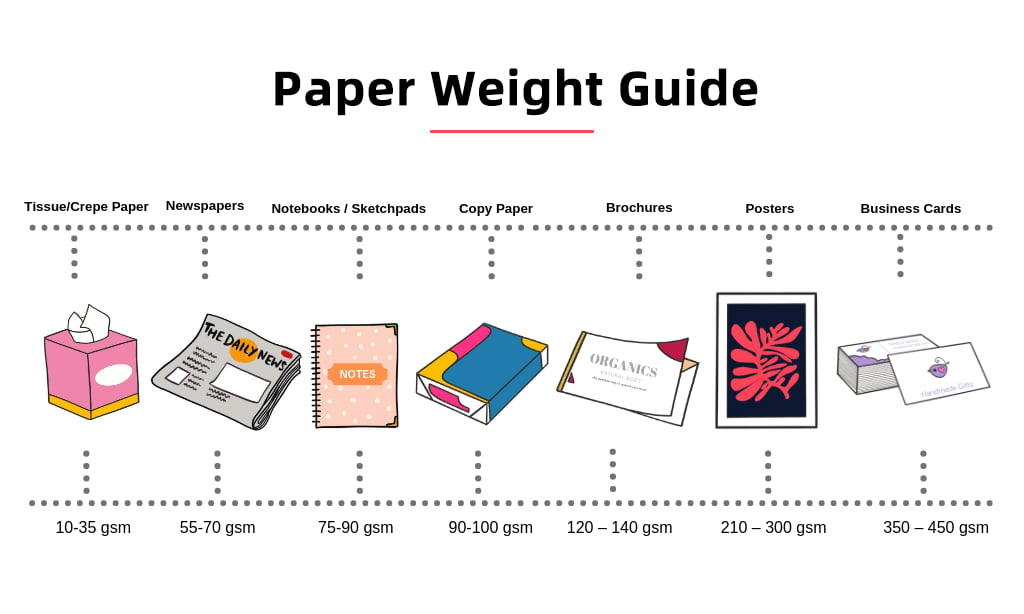





Below is a guide to different paper weights for you to consider when printing. Paper weight is measured in grams per square metre or GSM as it is more commonly known. In general, the higher the GSM rating the heavier and thicker the paper will be. You could spend hours, maybe days, designing your job to look great only to undo all your hard work by selecting the wrong paper weight. There's nothing more underwhelming than being handed a business card printed on 200gsm paper or receiving a greetings card that won't stand up because the paper is too light. Selecting the correct paper weight is important, hopefully this guide will help you do just that.
| Weigth | Used In |
|---|---|
| 80 – 100gsm | The weight range of standard office paper, used in your desktop laser printer or photocopier and would rarely be used for brochures. |
| 110 – 120gsm | Commonly used for stationary paper for things such as letterheads and compliment slips. |
| 130 – 170gsm | Heavier, more durable paper usually used for posters, leaflets, flyers and pages inside a book. |
| 170 – 200gsm | This is the midway point between paper and card. It can be used for brochure covers and is great when used for more luxurious posters or quality double sided flyers. |
| 250 – 300gsm | Moving away from paper, this is regarded as card (board) weights which can add a quality finish to a book if used as a cover. |
| 350 – 400gsm | Usually the weights of a good business card. Some will use 300gsm, or less, for a business card but we do not recommend it. 350gsm can also be used as a cover for your book but it’s important to remember the stitching and folding implications of using heavy board as a cover. |
| 350 – 400gsm | Some luxury business cards are printed on weights up to 1190gsm. Business cards would be considered thick and very good quality at above 400gsm. |
If designing a book be sure to consider the weight of paper on the inside and also your cover requirements. If you want to provide a quality professional finish then opting for heavier paper is your best choice. If you are looking to get across the idea of discounts and value for money then you may decide to run with a lighter paper weight throughout the brochure.
Customers like to use their senses when deciding on purchases and the sense of touch can often influence their decision. Make sure when your customer lifts your design that they aren’t let down by the type and weight of paper that you decided to go with.
In addition to selecting the correct weight of paper, you may decide to go with a more luxurious paper to really enhance your design. We have an excellent range of luxury papers that can help give your design incredible results.
| Type of paper | Available weights | Common uses |
|---|---|---|
| Bond paper | 16, 20, 24, 28, 32, and 36 pounds |
|
| Book paper | 30 to 115 pounds | Print books, booklets, catalogs, magazine publications, and posters |
| Cover paper | 60 to 120 pounds | Business cards, door hangers, menus, invitations, postcards, rack cards, report covers, self-mailers, and sketching |
| Index paper | 90, 110, and 140 pounds | Index cards, postcards, tabs and dividers, manila folders, and sketchbooks |
| Tag paper | 50, 60, 70, 80, and 100 pounds | Retail signage, price tags, table tents, file folders, door hangers, direct mail postcards, menus, posters, and time cards |
| Text paper | 50, 60, 70, 80, and 100 pounds | Commercial printing operations for brochures, letterhead print jobs, stationery, internal memos, and thesis papers |
What Does GSM Mean?
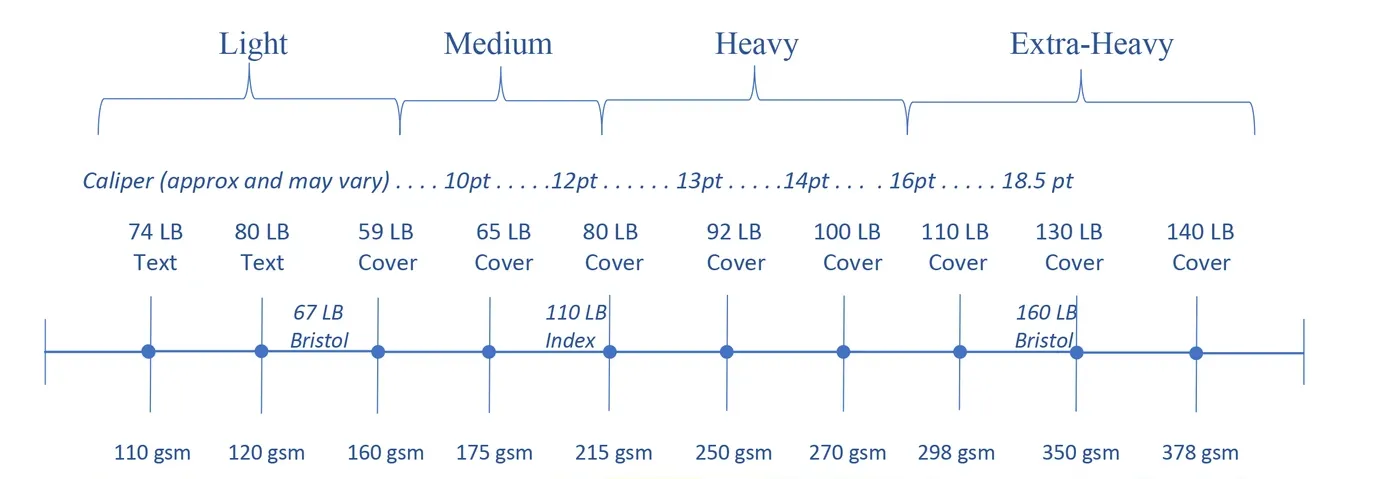
The term 'GSM', which stands for 'grams per square meter', is a unit of measurement for paper products. Rather than referring to sheet size, GSM measures only the weight of a sheet of paper. Put simply, the higher the GSM, the thicker the paper will be.
The GSM paper weight chart measures from light tissue paper (such as noissue's 17GSM custom tissue) up to heavier weight designs such as card.
